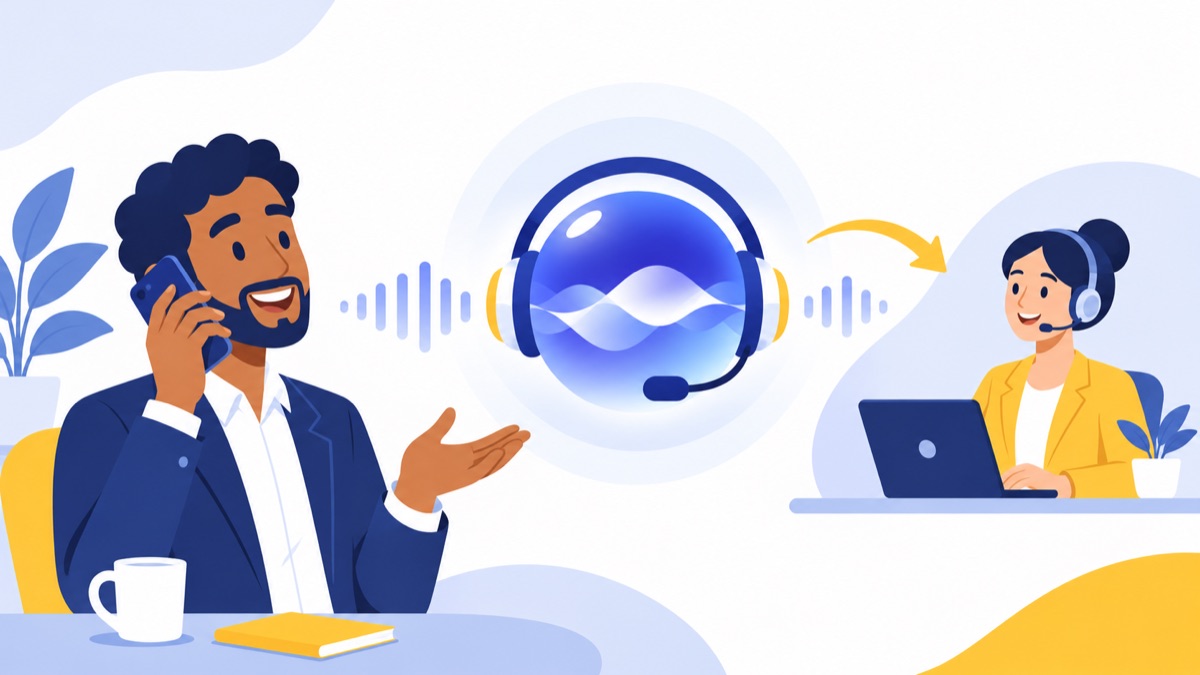
AI voice agents can answer routine calls, qualify leads, and schedule appointments by understanding spoken requests and taking defined actions. For small and midsize U.S. businesses, they can help manage call volume, but they work best with clear limits, reliable system connections, and an easy path to a person. This guide explains how they work, what they cost, how to evaluate one, and how to run a careful pilot.
Key takeaways
- An AI voice agent interprets natural speech and takes bounded actions, while a traditional IVR mainly plays prompts and routes keypad selections.
- A voice agent’s typical call flow includes speech recognition, intent and context handling, response generation, connected actions, and text-to-speech.
- The full cost can include platform fees, telephony, model usage, setup, integration, monitoring, and human support for escalations.
- The FCC confirmed that TCPA restrictions on artificial or prerecorded voice calls cover AI-generated human voices; outbound campaigns need a use-case-specific compliance review.
- A narrow pilot should track resolution, containment, transfers, repeat calls, caller satisfaction, and fully loaded cost per resolved call.
What are AI voice agents?
AI voice agents are software systems that talk with people over the phone, interpret what callers say, and complete defined tasks using connected tools. A business might use one to answer a routine service question, collect a prospect’s requirements, schedule an appointment, or route a caller—with relevant context—to a staff member.
An AI voice agent is a phone-based conversational system that interprets spoken requests and takes actions within set boundaries. Some use large language models; others combine speech recognition, dialogue software, and other AI components. The term describes a capability, not one fixed technical design.
How do AI voice agents differ from IVRs, voice bots, and human agents?
A traditional interactive voice response (IVR) system plays recorded or generated prompts and routes callers, often through keypad menus such as “Press 1 for sales.” A scripted voice bot may recognize a limited set of phrases but usually follows a narrow decision tree. An AI voice agent can handle more open-ended speech and respond to context, though it still needs guardrails and defined actions.
A voice assistant, such as a personal device assistant, is usually designed for an individual’s general tasks. A business voice agent is configured for a specific organization’s workflows, systems, and call policies. A human agent can use judgment, empathy, and exception handling in ways automated systems may not reliably match.
What can an AI voice agent do—and when does it need a person?
An agent can answer questions from approved information, collect details, classify a request, update a connected system, or transfer a call. Its authority should be limited to actions the business has tested and approved. For example, it might book an available appointment but require staff approval to change a disputed invoice.
A voice agent is a poor fit for tasks that demand unbounded judgment, sensitive negotiation, or reliable handling of every exception. It can misunderstand accents, noisy audio, unusual names, overlapping speech, or requests outside its knowledge. A responsible design gives callers a clear way to reach a person.
How do AI voice agents work on a phone call?
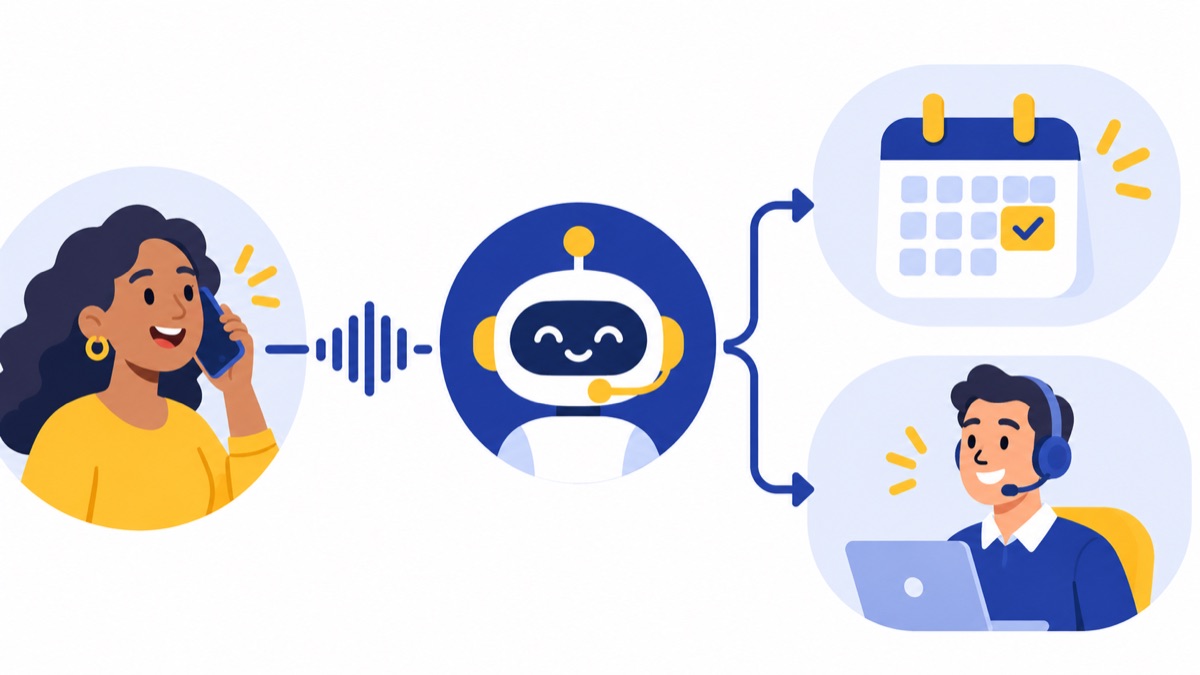
An AI voice agent typically converts a caller’s speech into text, identifies the request using the conversation and business context, generates a response, and may take an action through a connected system. It then converts its reply into spoken audio. The exact architecture varies, and a useful system also manages interruptions, silence, and escalation.
How does the agent identify what the caller wants?
The system captures audio and uses automatic speech recognition (ASR), technology that turns spoken words into text. It then identifies the caller’s intent—such as “reschedule my appointment”—and relevant details, such as a date or account number. The agent may use recent turns in the conversation to interpret follow-up answers.
If a caller says, “Actually, make that Friday,” the agent needs to connect “that” to the appointment being discussed. When confidence is low, the agent should ask a short clarifying question or transfer the call instead of guessing.
How does an AI voice agent use connected systems?
The agent creates a response based on its instructions, available information, and connected tools. It might check a calendar, look up an order, create a lead, or send a call to a queue. Text-to-speech (TTS) turns its response into audio for the caller.
For example, a customer asks whether a technician is available next week. The system can check an approved scheduling tool, offer an available slot, confirm the caller’s details, and book it. If the customer reports a safety issue or the calendar connection fails, the system should route the call to staff.
Why do latency and interruptions matter?
Latency is the delay between a caller speaking and the agent responding. Long pauses can make a conversation feel broken; replies that arrive too quickly can cut off a caller who is still speaking. Test with ordinary call conditions, including background noise, varied speaking rates, interruptions, and silence.
Ask vendors whether their systems support callers interrupting the agent, how they handle silence, and what happens if a connected service responds slowly. A demo call under ideal conditions does not show how the system performs with real customers.
What can AI voice agents do for a business?
AI voice agents can handle repeatable inbound and outbound tasks when a business can define what a successful call looks like and how exceptions reach staff. Common applications include answering routine support questions, qualifying leads, booking appointments, sending reminders, and following up. Outbound calls need a separate review for consent and calling requirements.
How can AI voice agents help with inbound support?
For inbound calls, an agent might answer common questions, gather information before a transfer, identify the right team, or provide an approved status update. A useful first deployment often handles one narrow category—for example, store hours or appointment availability—rather than every support topic.
If the caller has a complex complaint, requests a person, or repeats a question without getting a clear answer, the system should escalate. Passing along the reason for the call and details already collected can make the handoff more useful.
How can AI voice agents support sales teams?
A sales agent might ask a new lead about company size, needs, timing, or preferred callback window, then send those details to a customer relationship management (CRM) system. It can also direct a qualified caller to the right sales queue. The team should decide which questions are appropriate and what counts as a qualified lead before launch.
Outbound lead follow-up calls require extra care. Make sure the campaign has a legitimate basis to call, honors opt-outs, identifies the caller appropriately, and meets applicable rules before dialing.
Can AI voice agents schedule appointments and handle routine requests?
Appointment scheduling, confirmations, reminders, and rescheduling can suit automation when the process is standardized and the calendar connection is dependable. The agent should confirm important details aloud, such as the date, time, and location, and provide a way to reach staff if the system cannot resolve a conflict.
Routine outbound reminders and follow-ups still need review for the purpose of the call, consent, and applicable rules. A task being operational rather than sales-focused does not by itself establish that every calling method is permitted.
What are the benefits and limits of AI voice agents?
AI voice agents can offer consistent coverage for routine calls and help teams manage volume, including outside staffed hours. Results depend on accuracy, response time, integration quality, and callers’ willingness to use automation. A system that resolves calls poorly or creates repeat contacts can add work instead of reducing it.
A January–February 2025 Gartner survey of 4,879 customers found that 51% said they would be willing to use a generative AI assistant for customer service interactions on their behalf. That finding concerns customer service assistants generally, not AI voice agents specifically. It can inform customer research, but it does not predict how your callers will respond. (Gartner survey)
When should a human take over?
Set escalation rules before launch. Common triggers include:
- The caller explicitly asks for a person.
- The agent is uncertain about the request or a critical detail.
- The caller repeats themselves or the system misunderstands more than once.
- The topic involves a complaint, sensitive information, urgency, or an exception the agent cannot resolve.
- A required integration is unavailable or an action fails.
A good transfer includes the caller’s stated goal, information already collected, actions attempted, and the reason for escalation. Tell the caller what is happening, then connect them to a person or offer a clear callback option if the team is unavailable.
How do AI voice agents fit with business phone systems?
An AI voice agent automates parts of a conversation; a business phone system provides the numbers, calling, routing, queues, voicemail, and team workflows around those conversations. A team may use one without the other. Choose based on whether the main need is automated conversations, dependable call handling for staff, or both.
What phone features still matter when using an AI voice agent?
Even with an agent, a business needs call routing, business numbers, voicemail, and a way to reach employees. Start with this guide to VoIP services for business to understand the phone system basics. For a small support operation, this small call center phone system setup guide explains how numbers, queues, and staffing fit together.
Voicalyst supports human-led workflows through virtual phone system features, IVR menus and call routing, and AI call summaries. Sales teams can also use a power dialer, business texting, and HubSpot calling integration. These tools can organize and document calls handled by people; they do not mean Voicalyst offers autonomous voice agents.
How much do AI voice agents cost?
AI voice agent pricing may combine a monthly platform subscription, setup fees, and usage charges based on minutes, calls, or model activity. The advertised rate is only one input. Estimate total cost with your expected call volume, telephony, integrations, human oversight, and the number of calls the system actually resolves.
What costs belong in the comparison?
Request a written breakdown of:
| Cost component | What to ask |
|---|---|
| Platform or subscription | Is pricing per agent, number, location, or account? |
| Usage | Are voice minutes, model usage, or completed calls charged separately? |
| Telephony | Are inbound and outbound calling, transfers, and phone numbers included? |
| Setup and integrations | What do configuration, CRM or calendar connections, and testing cost? |
| Oversight | How much staff time is needed for transcript review, corrections, and escalations? |
| Support and changes | Are ongoing support, voice changes, and workflow updates included? |
Compare vendors using a fully loaded cost per resolved call: total monthly costs divided by calls resolved to the team’s agreed standard. Include calls that transfer, fail, or lead to a repeat contact in the analysis so a low per-minute price does not hide extra work.
How do you choose an AI voice agent?
Choose an AI voice agent by matching its capabilities to a defined call type, then testing the full call path with your systems and staff. A useful evaluation checks integrations, handoffs, voice quality, analytics, security, support, and deployment effort. Ask vendors to demonstrate your scenarios rather than relying on a generic demo.
What should an AI voice agent evaluation checklist include?
Use this checklist during vendor reviews:
- Use case: Which call types can the agent handle, and which must reach staff?
- Integrations: Can it read or update the CRM, calendar, ticketing, or order system you use?
- Telephony: Does it support your numbers, transfers, queues, and business hours?
- Voice and conversation: How does it handle accents, interruptions, noise, silence, and corrections?
- Testing: Can your team test realistic calls and review failures before launch?
- Analytics: Can you inspect transcripts, outcomes, transfer reasons, and call costs?
- Security and controls: What data is retained, who can access it, and how are actions limited?
- Support: Who helps troubleshoot call failures and update workflows?
- Deployment effort: What staff time and technical work are required to launch and maintain it?
Ask for examples of successful and failed calls, and test whether the system transfers context accurately. A polished voice alone does not show whether an agent is safe or useful for your process.
Should you build, configure, or use a managed option?
A build-it platform gives a team flexibility but usually requires more technical ownership and ongoing maintenance. A configurable product can be faster to adapt to standard workflows, while a managed contact-center solution may bundle more setup and operational support. A conventional phone system is often enough when the primary need is routing calls to people and organizing their work.
Estimate the time your team can commit after launch, not just the time to get a demo running. If no one owns reviewing failures, updating approved answers, and keeping integrations healthy, a complex deployment may not be sustainable.
Are AI voice agents legal for outbound calls in the United States?
Outbound AI voice calls are subject to federal and state rules that depend on the call’s purpose, technology, consent, and other details. The FCC confirmed that TCPA restrictions for calls using an artificial or prerecorded voice cover AI-generated human voices. Telemarketing calls may have additional requirements, so businesses should verify rules for their specific campaign. (FCC declaratory ruling)
The FTC says its Telemarketing Sales Rule generally requires prior written authorization for prerecorded telemarketing calls, subject to applicable exceptions and requirements. (FTC Telemarketing Sales Rule guidance)
Before an outbound campaign, review:
- Whether the call is telemarketing or another type of communication.
- Whether the required consent covers the number, purpose, and calling technology.
- Caller identification and any required disclosures.
- How a recipient can opt out and how the business records and honors that choice.
- Whether state rules, call-time restrictions, or other requirements apply.
This is a practical checklist, not a legal determination. Have qualified counsel review the specific campaign, states, and calling methods before launch.
How do you run a practical AI voice agent pilot?
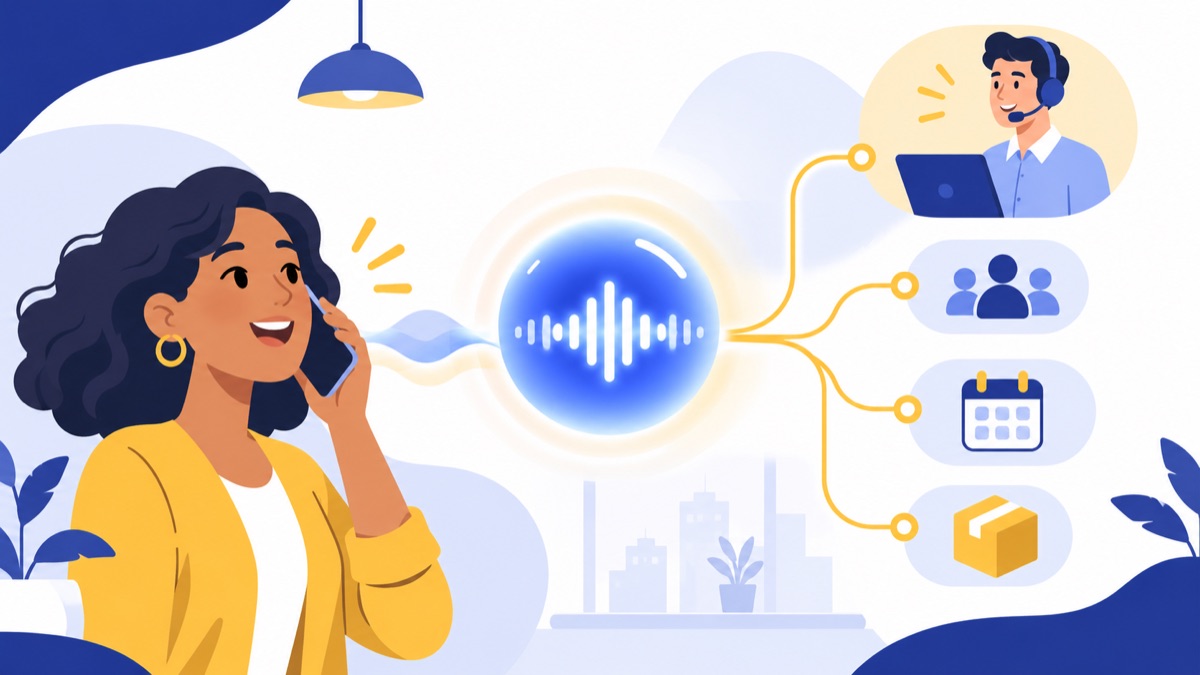
A practical pilot starts with one low-risk, repeatable call type and clear rules for when a person takes over. The team should test realistic calls, review transcripts, and compare outcomes with its current process before expanding. A pilot should measure resolved calls and caller experience, not just how many calls the agent answered.
How do you start narrow and test edge cases?
Pick a task with a clear finish, such as answering a defined set of hours-and-location questions or collecting lead details for a callback. Write down approved answers, actions the agent can take, and conditions that require a transfer.
Test calls with different accents, speaking speeds, noisy backgrounds, interruptions, corrections, unusual names, and unavailable integrations. Include requests outside the agent’s scope and callers who ask for a person. Review transcripts and listen to recordings where lawful and appropriate.
Which outcomes should you track before expanding?
Agree on a baseline and review measures at least weekly during the pilot:
| Measure | What it tells you |
|---|---|
| Resolution rate | Whether the call reached the intended outcome |
| Containment rate | How often the agent completed the call without transfer |
| Transfer rate | How often callers needed staff, and why |
| Repeat contact rate | Whether unresolved callers had to try again |
| Caller satisfaction | Whether the experience worked for customers |
| Cost per resolved call | The total cost of successful resolution, including oversight |
Do not treat a high containment rate as success if callers are stuck or calling back. Expand only when the agent meets the team’s service standard and transfers work reliably.
Frequently Asked Questions
Can an AI voice agent transfer a caller to a person?
Yes. A well-designed AI voice agent can transfer callers when they ask for a person, the request is sensitive, the system is unsure, or it has misunderstood repeatedly. Before transferring, it should pass along the caller’s goal, details already collected, and relevant account or appointment context so the caller does not have to start over.
Are AI voice agents legal for outbound calls in the United States?
They can be used for outbound calls, but requirements depend on the call’s purpose, technology, consent, and applicable federal and state rules. The FCC says TCPA restrictions on artificial or prerecorded voice calls cover AI-generated human voices. Telemarketing calls may have additional consent and disclosure requirements, so verify the rules for the specific campaign before calling.
How much does an AI voice agent cost?
There is no single standard price. A quote may combine a subscription or setup fee with per-minute platform, telephony, and model charges. Add integration work, monitoring, transcript review, and staff time for escalations. Compare providers using your expected fully loaded cost per resolved call, not only the advertised rate.
If your team is evaluating voice automation alongside its phone workflows, see how Voicalyst supports business calling with routing, queues, summaries, dialing, texting, and CRM connections.