
Area code 213 is associated with Downtown Los Angeles, California, and shares a numbering region with 323 and 738. The region is in the Pacific Time Zone; a 213 caller ID, however, does not confirm that the caller is physically in Los Angeles. This guide explains the coverage, overlay and dialing rules, ways to handle suspicious calls, and how a US business can request or port a 213 number.
Key takeaways
- Area codes 213, 323, and 738 serve the same Los Angeles numbering region, including Downtown Los Angeles and nearby communities.
- The 738 overlay began November 1, 2024, and local calls in the region use 1 plus the 10-digit number.
- The 213 region uses Pacific Time and observes daylight saving time.
- Caller ID can be spoofed, so a 213 number alone cannot verify a caller’s identity or location.
- A business can ask a provider for an available 213 number or request to port an eligible number, subject to provider rules.
Where is area code 213 located?
Area code 213 is in California and is most closely associated with Downtown Los Angeles. It is part of a shared 213/323/738 numbering region that covers Downtown and surrounding communities; the code identifies a numbering region, not the current location of the person holding the phone.
The California Public Utilities Commission (CPUC) and the North American Numbering Plan Administrator (NANPA) name Downtown Los Angeles and communities including Alhambra, Bell, Beverly Hills, Commerce, Glendale, Inglewood, Pasadena, and unincorporated portions of Los Angeles County in the region. The overlay announcement lists these communities.
What an area code can—and cannot—tell you
An area code is the first three digits of a North American phone number. It points to a numbering area where the number was assigned; it does not track a person’s current whereabouts. People can keep their numbers when they move, and calls can be forwarded or made over internet phone services from elsewhere.
That means a 213 phone number may be used by someone outside Los Angeles. Likewise, seeing 213 on your caller ID does not establish that a call originated in the 213 area.
What cities and communities use the 213 area code?
The 213 area code location is part of the broader region shared by 213, 323, and 738. That region includes Downtown Los Angeles and named nearby cities and communities such as Alhambra, Bell, Beverly Hills, Commerce, Glendale, Inglewood, and Pasadena, along with unincorporated parts of Los Angeles County.
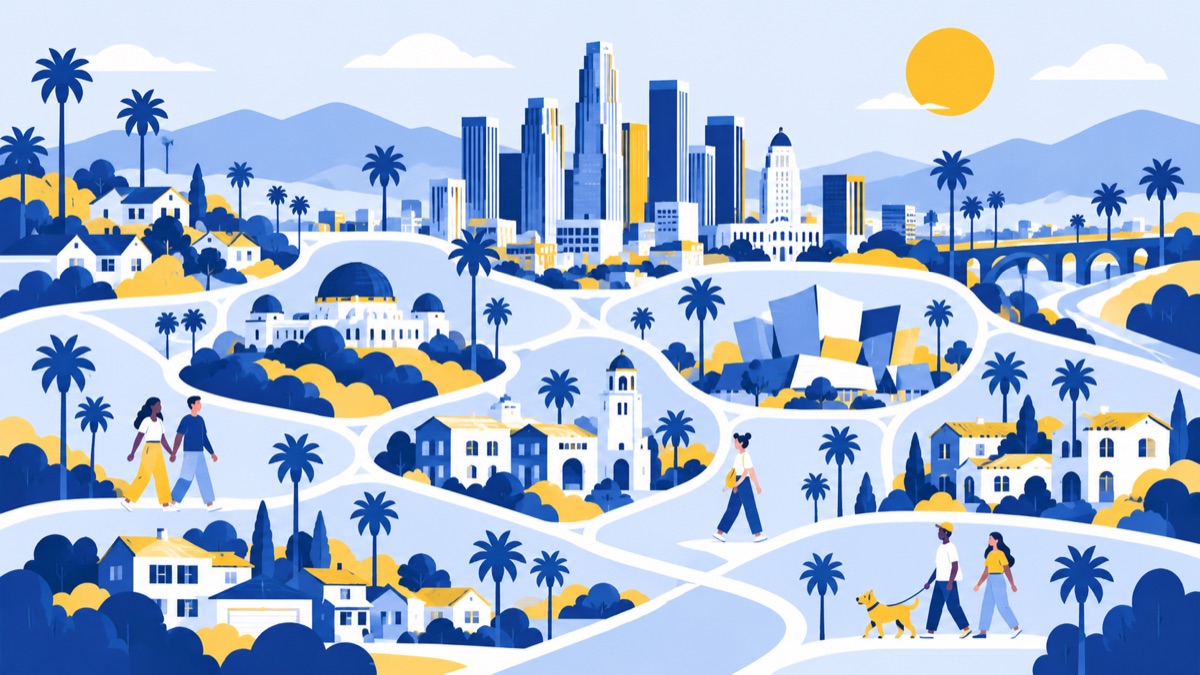
Los Angeles and nearby cities
Los Angeles is the central city associated with the 213 area. The regional list also includes these representative communities:
- Alhambra
- Bell
- Beverly Hills
- Commerce
- Glendale
- Inglewood
- Pasadena
- Unincorporated parts of Los Angeles County
This is a regional overview, not a street-by-street lookup. A city name alone does not tell you whether a particular address uses 213, 323, or 738.
Why boundaries do not match city or county borders
Area-code coverage follows telephone numbering boundaries, which can cut across municipal borders and do not necessarily cover every neighborhood in a named city. Los Angeles County is much larger than the 213/323/738 region, so the mention of unincorporated county areas does not mean the entire county uses these codes.
The three-code overlay also means that a location in the shared region can have numbers with different area codes. A 213 code is one option associated with the region, not the exclusive code for every address there.
What time zone is area code 213 in?
The 213 region uses Pacific Time and observes daylight saving time: clocks use Pacific Standard Time (PST) in winter and Pacific Daylight Time (PDT) during the summer. If you are calling from another time zone, check the current local time in Los Angeles before placing the call or booking a meeting.
For example, a 9 a.m. appointment in Los Angeles is Pacific Time, but its corresponding time on your calendar depends on the date and your own time zone. Confirm both the time and date when setting a call across regions.
Calling Los Angeles from another time zone
For a scheduled sales call or support handoff, include “Los Angeles time” or “Pacific Time” in the invitation. Check the time again on the day of the call if the participants are in different states, especially around seasonal clock changes.
A time-zone label tells you when the number’s regional community is on the clock; it does not tell you where the person answering is located.
How do the 213, 323, and 738 overlays work?
Area codes 213, 323, and 738 serve the same geographic numbering region in Los Angeles. The 738 overlay took effect November 1, 2024, adding a third code for new numbers as available numbering resources are assigned; it did not change existing phone numbers or local-call coverage.
What an overlay means for new numbers
An overlay adds another area code to a region already served by existing codes. It lets new numbers be assigned without requiring customers to change existing numbers. In the 213 area, the three codes serve the same region, so a new customer may receive 738 when available 213 or 323 resources are assigned.
The NANPA overlay announcement set November 1, 2024, as the date 738 was added. A provider can explain which numbers are currently available, but no particular 213 number is guaranteed.
Do you need to dial 1 and the area code?
Yes. Customers in the 213/323/738 overlay region use 1 plus the 10-digit number for local calls. That means dialing 1, the three-digit area code, and the seven-digit subscriber number.
The overlay did not change existing phone numbers or which calls count as local. It did make 10-digit dialing, with the leading 1 for local calls, the standard described in the NANPA notice.
Is an unexpected call from 213 a scam?
A call displaying 213 may be legitimate, unwanted, or fraudulent; the area code by itself cannot tell you which. Caller ID can be faked, so treat an unexpected request for money, passwords, verification codes, or account details as unverified even if the number looks local.
How caller ID spoofing works
Caller ID spoofing is the practice of changing the number displayed on a recipient’s phone. The Federal Trade Commission warns that scammers can fake caller ID numbers, including local numbers, and the Federal Communications Commission describes “neighbor spoofing” as making a call appear to come from a local area code and exchange. FTC guidance on fake numbers and FCC material on neighbor spoofing explain why a familiar area code is not proof of identity.
There is no basis here to treat 213 calls as inherently more suspicious than calls from other area codes. Focus on the caller’s request and verify it independently.
A short safety checklist for calls and texts
- Do not share sensitive details such as passwords, payment information, or one-time verification codes in response to an unexpected call or text.
- Verify the organization independently. Find its official number through a statement, card, or website you already trust, then call that number yourself.
- Avoid links and urgent payment demands in unexpected texts. If a message claims to be from a company, use its official app or website instead.
- Block unwanted callers using your phone or carrier’s tools.
- Report unwanted calls or texts through the relevant government reporting channel or your carrier.
How can a business get a 213 phone number?
A US business can ask a phone provider for an available 213 number or request to port an eligible existing number, subject to provider eligibility and available inventory. A local number can give customers a convenient Los Angeles contact point, but it does not guarantee local trust or establish that the business has a physical office there.
Request a new number or port an existing one
Start by deciding whether you need a new number or want to keep one your business already uses. Ask providers which 213 numbers are available, whether they support your team’s calling and texting needs, and what information they require to check port eligibility.
Porting is the process of moving an existing phone number to a new provider. Before requesting a port, confirm the current account details and ask the provider to explain the sequence and any service impacts. See this guide to choosing, porting, and routing a local business phone number.
Set up a local presence with a real operating plan
For a small sales or support team, a Downtown Los Angeles business phone number can appear on local marketing and give prospects a familiar way to reach the team. Set the number up to reach the right people, and describe the business’s location accurately. An area code alone should not be used to imply a Los Angeles office if the business does not have one.
Voicalyst offers a browser-based calling system for teams that want to manage calls and follow-ups from a computer. Depending on the workflow, features include business phone menus and call routing, queues, voicemail, AI call summaries, a power dialer, business texting, and HubSpot calling sync. A team can route new inquiries to sales, send after-hours callers to voicemail, and keep call notes connected to its follow-up process. Learn more about Voicalyst.
Business-number setup checklist
Before publishing a 213 number, confirm:
- Availability: Can the provider assign the specific area code and number you need?
- Porting: If keeping an existing number, is it eligible, and what does the transfer require?
- Caller ID: What name and number will customers see when your team calls?
- Routing: Who answers during business hours, and where do overflow calls go?
- Voicemail: Is there a clear greeting and a reliable way to retrieve messages?
- Texting: Can the team send and manage business texts through the number?
- CRM sync: Will calls and notes connect to your CRM, such as HubSpot?
- Location disclosure: Do your website and greetings describe your business location accurately?
For more on the tools, process, and costs involved, compare options in this small-business VoIP phone service guide and business phone system pricing guide.
Frequently Asked Questions
Is 213 only Downtown Los Angeles?
No. Area code 213 is associated with Downtown Los Angeles, but 213 is part of a shared numbering region with 323 and 738. The region includes nearby communities such as Alhambra, Bell, Beverly Hills, Glendale, Inglewood, and Pasadena, plus some unincorporated parts of Los Angeles County. Boundaries do not align exactly with city or county lines.
Is 213 a toll-free code?
No. 213 is a geographic California area code associated with the Los Angeles numbering region. Toll-free numbers use different codes. A call’s cost depends on the caller’s phone plan and the kind of call; the area code alone does not determine whether the call is free.
Can a business outside Los Angeles use a 213 number?
A business outside Los Angeles can ask a provider for an available 213 number or request to port an eligible number, subject to provider rules and availability. The number can give customers a Los Angeles contact point, but it is not proof of a local office. Businesses should describe their location and service area accurately.
Do I have to dial 1 and the area code for local calls in the 213 area?
Yes. In the 213/323/738 overlay region, local calls use 1 plus the full 10-digit number. The 738 overlay did not change existing numbers or local-call coverage; it added another area code serving the same region.