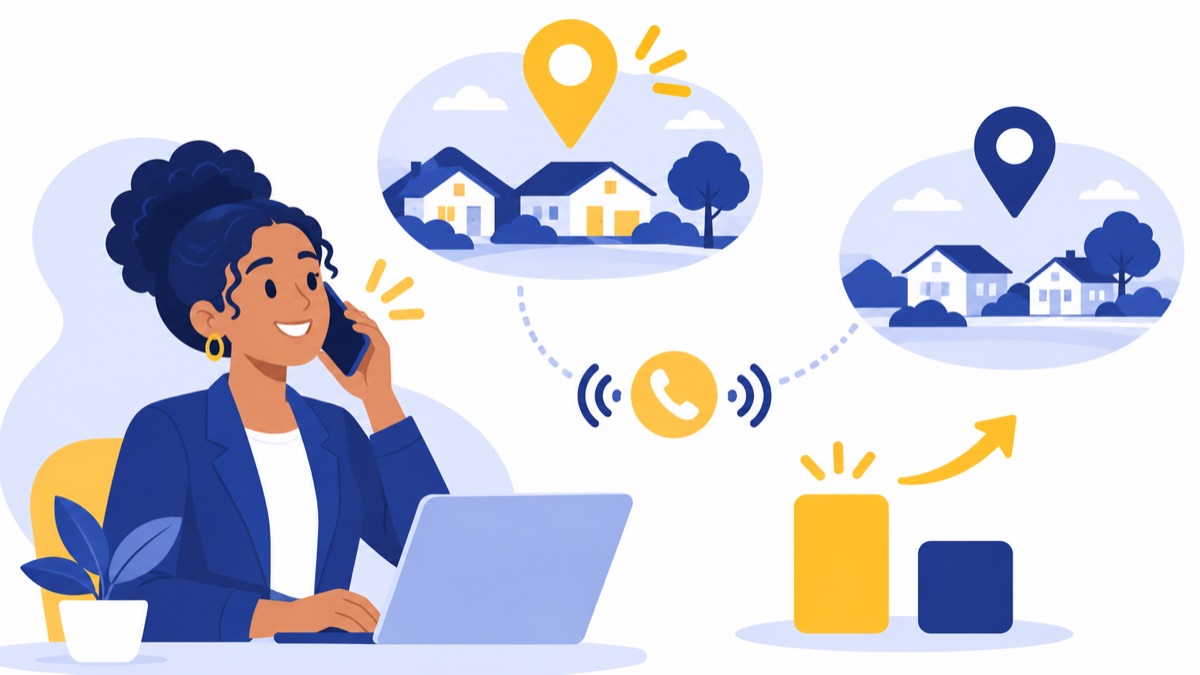
Local presence dialing displays an outbound number with an area code near the person you are calling. That familiarity may help some sales or support teams get a call answered, but the evidence does not show a dependable lift for every list—and a local-looking number can also raise suspicion. Here’s how the tactic works, what the available data can and cannot tell you, and how to test it while watching conversions and number reputation.
Key takeaways
- Local presence dialing presents an authorized business number selected to match or resemble a recipient’s area code; it does not establish that the caller is physically local.
- Orum’s analysis of more than 1.5 million calls from fall 2021 found no statistically significant pickup difference between local and non-local calls.
- The FCC describes STIR/SHAKEN as a way to authenticate caller ID information, not as a guarantee of answerability or a clean spam reputation.
- A fair test randomizes comparable prospects, holds call conditions steady, and tracks live answers alongside meetings, callbacks, opt-outs, complaints, and spam labels.
What does local presence dialing mean?
Local presence dialing is a dialing approach that displays an outbound business number with an area code or region similar to the recipient’s. A dialer selects a number from the business’s available pool for the call, while the caller may be working from anywhere; the displayed area code is not proof of the caller’s location.
How area code matching works
With area code matching, a dialer compares a prospect’s phone number or location with numbers configured for the business and presents a selected number as caller ID. Matching rules vary: some systems look for the same area code, while others use a nearby region when no exact match is available.
When the recipient calls back, the call should reach a staffed business line, queue, or other configured destination. Before enabling matching, confirm that each number can be answered or routed, and that the team knows how to handle callbacks. A call that gets answered but leads to a dead end can undermine trust.
Local caller ID, spoofing, and branded caller ID are different
Local caller ID means the number displayed to the recipient looks local or regionally familiar. Legitimate local presence uses a number the business is authorized to present; caller ID spoofing falsifies caller information. Branded caller ID is a separate capability that can display an organization name or other verified caller details where supported.
An area code alone does not tell a recipient who is calling or where the caller is. The FCC has warned that neighbor spoofing can make a call appear to come from the recipient’s own area code and local exchange, which helps explain why a familiar number may not always feel trustworthy. The FCC’s neighbor-spoofing warning provides context for that concern.
Does matching area codes raise answer rates?
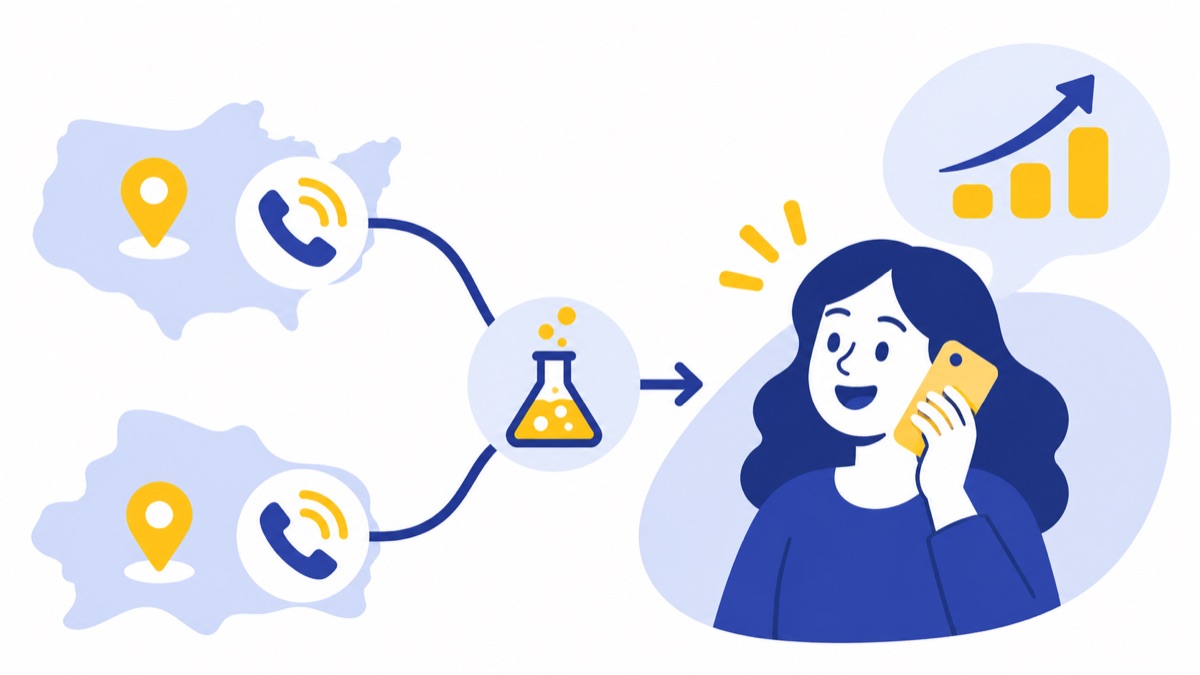
Matching area codes may affect whether some people answer, but it is not an established answer-rate improvement across audiences. Vendors often describe local familiarity as a reason for higher pickups; the useful question for a team is whether local caller ID improves its own results without hurting trust, conversion, or number reputation.
What vendors claim
The proposed mechanism is straightforward: a recipient recognizes the area code and is more willing to answer an unfamiliar call. That may be plausible for some regional outreach, but a claim of higher pickup is hard to assess without knowing what the source counted, which prospects were called, and whether there was a comparable control group.
What the available call data show
Orum reported analyzing more than 1.5 million calls made in fall 2021. It found a 4.6% connect rate for local calls and 5.5% for non-local calls, and reported no statistically significant pickup difference in its analysis. This is useful counterevidence to blanket claims of a lift, but it is vendor-reported, dated evidence—not a universal benchmark or proof that every audience responds the same way. Read Orum’s analysis and methodology.
Be careful when comparing reported outcomes. An answer rate may count any answered call; a connect rate may count calls that reach a person or meet a platform’s connection definition; a live contact rate may require reaching the intended prospect. Those measures are not interchangeable. Check the definition, denominator, and time period before drawing conclusions.
Why results may differ by audience
Area code matching may matter differently by region, industry, call purpose, and recipient expectations. A local number may fit a nearby service appointment or regional account conversation, while a national prospect may not recognize the number at all. Some recipients associate unexpected local calls with neighbor spoofing or spam, so a familiar area code can prompt skepticism instead of confidence.
When might local presence help—and when can it backfire?
Local presence may be worth testing when the business serves defined regions and a local-looking number fits the reason for calling. It can backfire when recipients see the number as misleading, when callbacks are not handled well, or when a team uses matching without checking number reputation and downstream results.
Local and regional outreach
A home-services company calling customers about appointments in one metro area might test numbers associated with that region. A regional sales team could test the tactic for accounts in its territory, provided the number accurately represents a reachable business contact and the caller explains the purpose clearly.
National or trust-sensitive outreach
For a national campaign, a local number may imply a nearby relationship the business does not actually have. In financial, health, or other trust-sensitive contexts, unexpected local caller ID may create more questions than it answers. Test by segment rather than assuming one policy will suit every call type.
Make callbacks part of the design
Before a campaign starts, call each presented number from an outside phone and confirm where it routes. Set expectations for who answers, how missed callbacks are returned, and how the team identifies the campaign. If callbacks cannot reach a person or a useful voicemail, the number may create a poor experience even when the outbound call is answered.
Can local caller ID lead to spam labels?
Local caller ID does not erase a number’s history or prevent a “Spam Likely” label. Caller labeling practices differ across providers and analytics services, and the exact reasons a particular number receives a label may not be visible to a business; treat number reputation as an operational risk to monitor rather than a problem area code matching solves.
What STIR/SHAKEN does and does not do
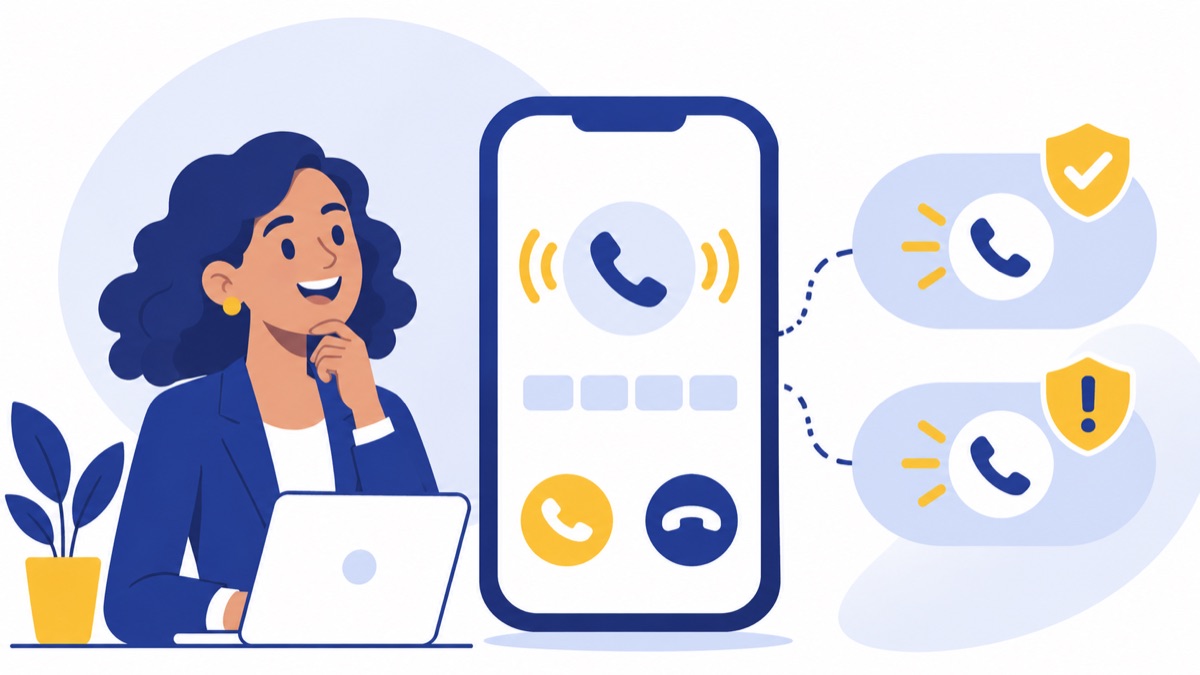
STIR/SHAKEN is a framework for authenticating and verifying caller ID information that travels with calls. The FCC says the framework can help providers use that information to protect subscribers, but authentication does not guarantee that a recipient will answer, that a number has a clean reputation, or that the caller has a local relationship. The FCC’s report on unwanted calls and caller ID authentication explains the role and limits of the framework.
Why number reputation needs attention
A number’s labeling and reputation may be affected by calling patterns and recipient responses, but businesses should not assume they know the exact scoring rules used by a carrier or analytics service. The FTC received more than 2 million Do Not Call complaints in fiscal year 2024, with more than 253 million active registrations on the registry. Those figures show the scale of unwanted-call concerns; they do not measure local presence effectiveness. See the FTC’s FY 2024 registry data.
What to monitor and how to respond
Track whether labels appear, when they appear, which numbers are involved, and whether answer or complaint patterns change. Use numbers the business is authorized to present, keep call behavior consistent with recipients’ expectations, and follow applicable calling rules. If a number appears mislabeled, contact the phone provider and ask what review or remediation process is available; do not promise that a label can be removed.
For practical safeguards on consent, calling hours, and related obligations, review this TCPA compliance checklist for sales calls. If your business number is flagged, use the steps in this Spam Likely business number recovery plan.
How can you run a fair local presence test?
A fair local presence test randomly assigns comparable prospects to matched local caller ID or the team’s normal caller ID, then holds the rest of the calling process steady. Define live answer rate as the primary outcome before dialing, track conversion and reputation guardrails, and report uncertainty so a small or noisy result is not mistaken for a reliable lift.
Randomize comparable prospects
Choose an eligible prospect list and randomly assign each person or account to one of two groups:
- Test: calls display an authorized number matched to the prospect’s area code or region.
- Control: calls display the team’s normal business number.
Keep accounts together in one group if multiple contacts at the same company might otherwise receive calls from both conditions. That reduces the chance that one account experiences both caller-ID approaches during the test.
Hold other call conditions steady
Use comparable lists and keep the rep mix, script, local calling time, attempt cadence, and qualification rules consistent. Make caller-ID number reputation as comparable as practical: a test number with a recent spam label and a control number with a long, clean history would make the comparison difficult to interpret.
Run the test long enough to capture meaningful call volume across normal operating days and campaign conditions. There is no universal sample size that fits every team. Before starting, estimate how many calls and prospects you can reach, and consult a statistician or a suitable sample-size calculator if you need to detect a particular change with defined statistical confidence.
Choose metrics and guardrails before dialing
Set live answer rate as the primary metric and define exactly what counts as an answer—for example, a person answers, excluding voicemail and IVR. Write down the numerator and denominator so the test groups use the same rule.
Track other outcomes separately:
| Measure | What it helps you assess |
|---|---|
| Connect rate | Whether calls reach a person under your stated definition |
| Live contact rate | Whether the intended prospect answers or is reached live |
| Meetings booked | Whether conversations produce a sales outcome |
| Callbacks | Whether recipients return the call and how those calls are handled |
| Opt-outs and complaints | Whether outreach creates recipient friction |
| Spam labels | Whether number reputation may be worsening |
Do not treat a higher answer rate as a win if meetings fall or complaints and spam labels rise. Compare outcomes by group over the same time window, and report counts as well as rates so small denominators are visible.
Read results by segment
Review the overall result, then check sensible segments such as region, industry, call purpose, and customer or prospect status. Keep segment comparisons exploratory unless the test was designed and powered to answer those questions; splitting a modest sample many ways can make random variation look meaningful. Repeat or extend the test when results are inconclusive, and monitor reputation after the first campaign as well as during it.
What decision rule should a sales team use?
Keep local presence dialing only where a controlled test shows a useful improvement in the outcomes your team values without worsening meetings, complaints, opt-outs, callbacks, or number reputation. If results are mixed, narrow the tactic to the segments that show consistent value or run a better-powered test before expanding it across the whole team.
A dialer and business phone system can make the experiment easier to operate, but they cannot prove that matching raises answer rates. Voicalyst’s power dialer can support outbound workflows, while call routing and AI call summaries can help teams handle callbacks and review conversations. HubSpot integration can help connect activity to CRM records for measurement.
For a broader workflow guide, see how to increase call connect rate. Voicalyst’s phone system for sales teams is one option to evaluate for your team’s calling and tracking needs.
Frequently Asked Questions
Does local presence dialing actually increase answer rates?
It may change pickup behavior for some audiences, but available evidence does not establish a reliable lift. Orum reported a 4.6% connect rate for local calls and 5.5% for non-local calls in its fall 2021 analysis of more than 1.5 million calls; its test found no significant difference. Run a controlled test on your own prospects.
Is local presence dialing the same as caller ID spoofing?
No. Local presence dialing presents a business number selected for geographic similarity, and the business should be authorized to use and answer or route that number. Spoofing misrepresents caller ID. A familiar area code by itself does not prove the caller is nearby or trustworthy.
Can local presence dialing cause a Spam Likely label?
Area code matching does not itself prevent or guarantee a spam label. Number reputation and labeling systems vary, and repeated unwanted calls or other calling patterns may create problems. Monitor labels and outcomes, use authorized numbers, follow applicable calling rules, and ask your provider about remediation if a number is flagged.